
Fairfield County Wanted List Reality
Fairfield County operates without a county government at all. No sheriff's department. No county jail. No sheriff-run wanted page, either. Connecticut scrapped county government in 1960, then merged all corrections into one state system eight years later. Municipal police handle most local arrests. State troopers and federal agencies cover what is left. So the familiar photo roster people expect from sheriff-led states simply does not exist here, no matter how often it gets searched for.
The cities do not fill the gap. None of them maintains a steady list with set update schedules, uniform fields, photo rules, tip lines, or posted rewards. Bridgeport, Stamford, or Norwalk police will sometimes publish a dated appeal tied to a single case. That is a public notice by choice, not a county-wide roster. U.S. Marshals Service wanted notices appear at times with photos attached, though they track selected federal fugitives rather than ordinary local warrants.
The missing list changes how a search should run. Start with the agency named in any notice you see, not with Bridgeport Correctional Center. That state facility lists the courts it serves, but it posts no wanted list and no roster of its own. If an arrest has already happened, the statewide CT DOC locator may show a profile after its nightly update. Someone released by police might never appear there. Keep custody status and open warrants separate in your mind; they answer different questions.
Fairfield County Wanted Notice Fields
There is no county roster here. Every wanted appeal takes its own shape. Format depends on the agency and the case. A dated notice from a city or a federal office usually carries only the facts needed to ask the public for help. The field table below shows what may appear on a notice. Just as important, it shows what each field cannot tell you.
| Possible field | What it means |
|---|---|
| Name or alias | The identity used in that notice. Confirm it with more than a name. |
| Photograph | An agency-supplied identifying image, which may not be current. |
| Warrant basis | The alleged charge, probation issue, or court order stated by the publisher. |
| Description | Age, height, or other traits supplied for identification in that appeal. |
| Last known area | A lead for the investigation, not proof of present location. |
| Agency contact | The official route for a tip or case-specific question. |
Dates carry the most weight on any notice. So does the publisher, and the date of the last update. Charges can change, and a warrant may be served or pulled while an old post still sits online. Verify anything you find before you rely on it.
Note: Photos stay on official agency pages; no Fairfield County wanted or booking-photo gallery is reproduced here.
Use Fairfield County Wanted Sources
Every wanted notice online was published by an agency on a particular day. Go to the original posting. There, the sheriff's name, the issue date, the safety warnings, and the tip line stay connected to the record. Search engines can serve up listings long after they expire. So check the age of a Fairfield County most wanted entry before you act on it.
- Open the original municipal police or U.S. Marshals notice, not a copied image or social repost.
- Confirm the publishing agency, issue date, subject identifiers, and exact warrant or charge stated.
- Look for a later update from the same agency before treating the appeal as open.
- Send information only to the official contact in the notice. Use 911 when there is immediate danger.
- For custody after an arrest, use the official paths in the Fairfield County booking and DOC search, then follow the court case.
Never approach, follow, detain, or accuse anyone who looks like a photo. Faces repeat. Names do too. A resemblance or a shared neighborhood proves nothing, and a wrong call can do real harm. The safe move is simple: pass what you know to the listed agency and let trained officers take it from there.
Social media has limits of its own. Town police pages do post wanted bulletins, missing-person appeals, and arrest updates now and then. Those posts are announcements, not databases, and they go stale fast. No Fairfield County "Warrant Wednesday" program or sheriff's app could be confirmed. Before sharing, confirm the account is official and the post still links to an active agency notice. CT VINE is a different tool entirely, sending opt-in custody and court alerts once a person is in the system, but it will not hunt for warrants or wanted photos and cannot stand in for the court.
Check Fairfield County Warrants
A warrant search covers less ground than people assume. Connecticut's Judicial Branch points to one route for active warrants. It also warns that some types stay hidden. The public Violation of Probation warrant search accepts a name, town, or court location. It lists VOP warrants only. Bench warrants and other local arrest orders will not appear. So an empty result settles nothing. The Judicial help page states that limit plainly, which makes the tool a starting point rather than a final answer.
If the warrant might carry your own name, do not let a web result decide your next move. A lawyer can confirm the right court and read what the order says. Counsel can also plan a lawful response without your business going public. The court clerk can verify the correct office and current case details within normal access rules. In short, resolve it. Nothing here supports dodging police, hiding out, stalling service, or testing whether an agency will act. Open the Connecticut Judicial warrant-check guidance before running the public search.
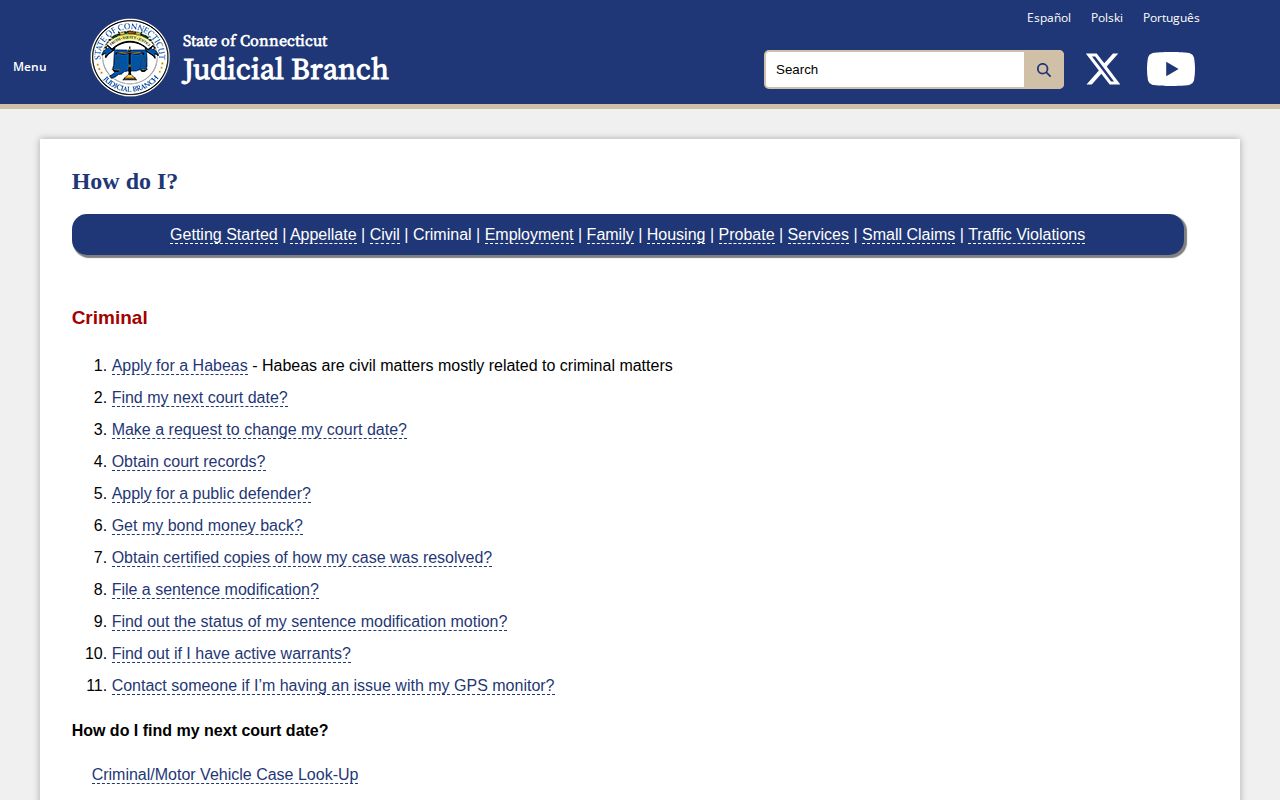
The court's own caution still stands: results from the online search may not include every type of warrant.
- Search the supported public route with the full name and, where offered, town or court location.
- Check spelling and identity details. A common name can produce the wrong person.
- Read the source limits. No result is not a guarantee that no warrant exists.
- Use an attorney or the clerk for the relevant court to confirm status and the lawful next step.
- Direct municipal failure-to-appear questions to the arresting city's police agency when appropriate.
Fairfield County Warrant Types
Warrants come from different corners of the legal system. Some show up in public listings; plenty never do. The table below works as a routing aid and nothing more. It points to where each type of record usually lives, not to one database that holds everything. For confirmation of an actual warrant, the court is the authoritative stop.
| Warrant or notice | Best official route | Key limit |
|---|---|---|
| Violation of probation | Judicial VOP search, then court clerk | The public tool is limited and may not be complete. |
| Arrest warrant | Relevant court, attorney, or arresting police agency | Full PRAWN access is restricted to authorized agencies. |
| Failure to appear | Assigned court and the municipal police agency | A city issue does not create a county sheriff record. |
| Federal fugitive notice | U.S. Marshals official notice and tip channel | Selected federal cases only, not a local warrant index. |
The vocabulary deserves a quick note. A warrant is simply a court order. A wanted appeal is different: it asks the public for help finding someone. Cases end at a stage called the disposition, and that outcome can differ from the charge or warrant that started things.
Why Fairfield Warrants Stay Partial
Connecticut keeps its warrant data inside a system called PRAWN, short for Paperless Arrest Warrant Network. Access goes to authorized agencies only. There is no public name-search option, and that limit is deliberate. State Judicial and OPM resources show just small slices of the larger pipeline. Fairfield County did not fail to build a sheriff's portal; the design simply excludes the public from the network itself.
One of those slices is the OPM arrest-warrant data page, which posts a limited report about once a month. Think aggregate numbers within set bounds. It is not a live roster of names.
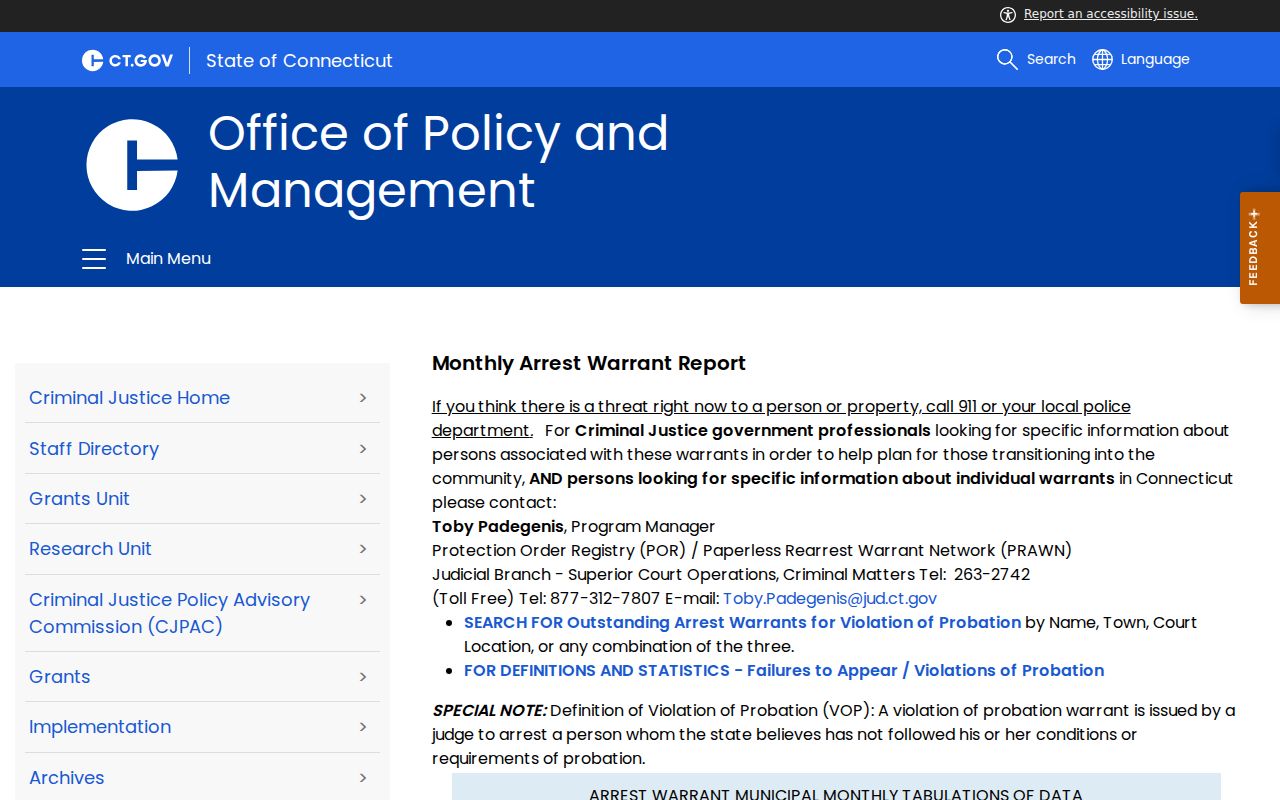
That OPM page also sends violation-of-probation questions to Superior Court Operations. No county warrants unit exists to phone. Want to know how police and courts trade warrant data? The official PRAWN overview explains the whole setup.
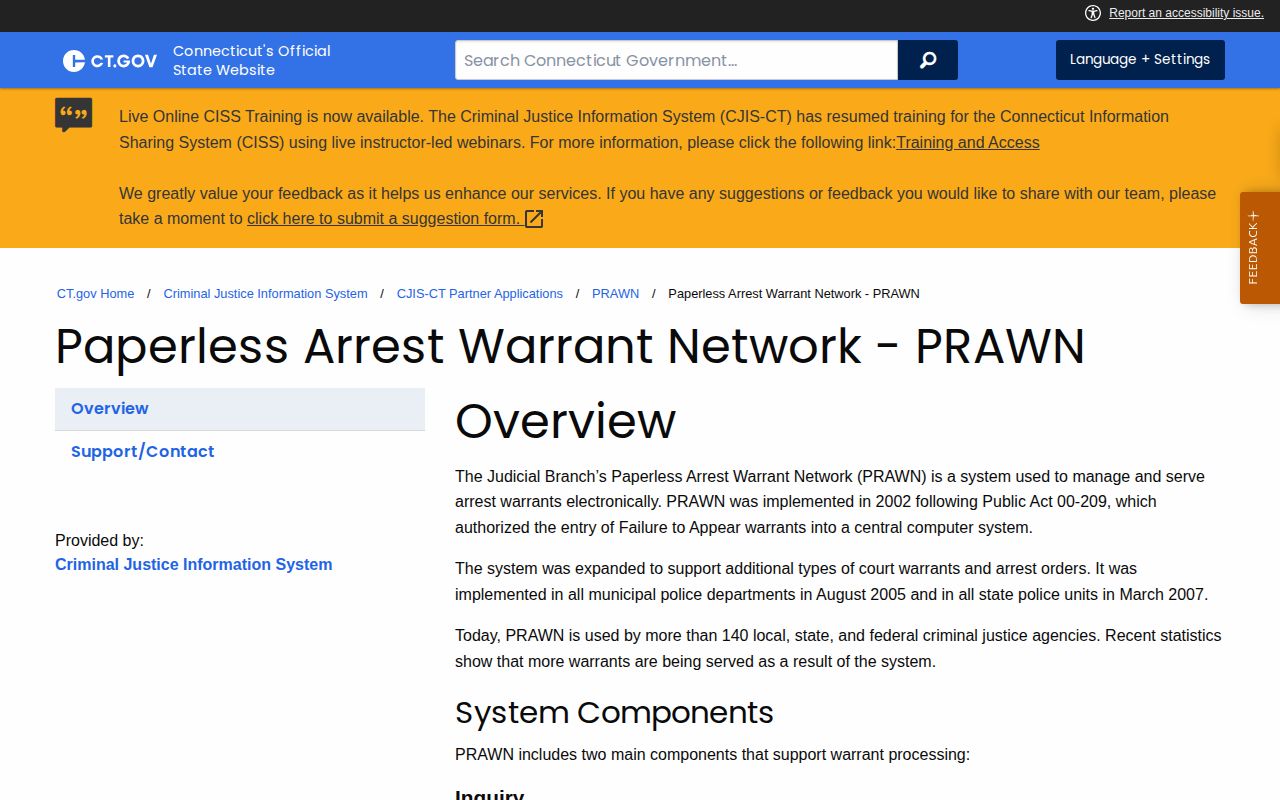
Here is the bottom line. A system built for sworn agencies is not a public Fairfield County warrant portal. The two serve different purposes entirely. Anyone with a real stake in a warrant should work through an attorney or the court rather than rely on public slices.
Note: PRAWN's closed access and the thin reach of public tools make attorney or court confirmation the safest path for anyone directly affected.
Fairfield County Warrant Contacts
Fairfield County has no confirmed Crime Stoppers line. No anonymous tip program or reward policy is attached to a standing wanted list. So skip any assumption that a call stays nameless or pays cash. Use the contact details published with a specific municipal or federal appeal. Take general warrant questions to the court or agency holding that record.
Official contact routes
Immediate danger: 911
Individual VOP information: Superior Court Operations, Criminal Matters
Phone: (860) 263-2742 or (877) 312-7807
Local appeal: The publishing municipal police agency's official tip or non-emergency contact
Facts help callers more than hunches. Pass along the original notice, the time and place you observed, and a clear account of what you saw. Skip the temptation to post someone's location or personal details in comment threads. The agency will sort out what actually matters.
Fairfield County Warrants and Court
A warrant record freezes one moment in a case. An arrest may follow it. Station processing can end with release on a promise to appear or on bond, and anyone held moves into the statewide CT DOC system. From there, the Connecticut Judicial pending-case and conviction searches, along with the clerk's official file, carry the story forward.
The VOP search interface shows how narrow the public window is. Name, town, and court are the query fields. Treat it as one view, never a full county warrant roster. For the supported fields and limits, view the official Violation of Probation search form.
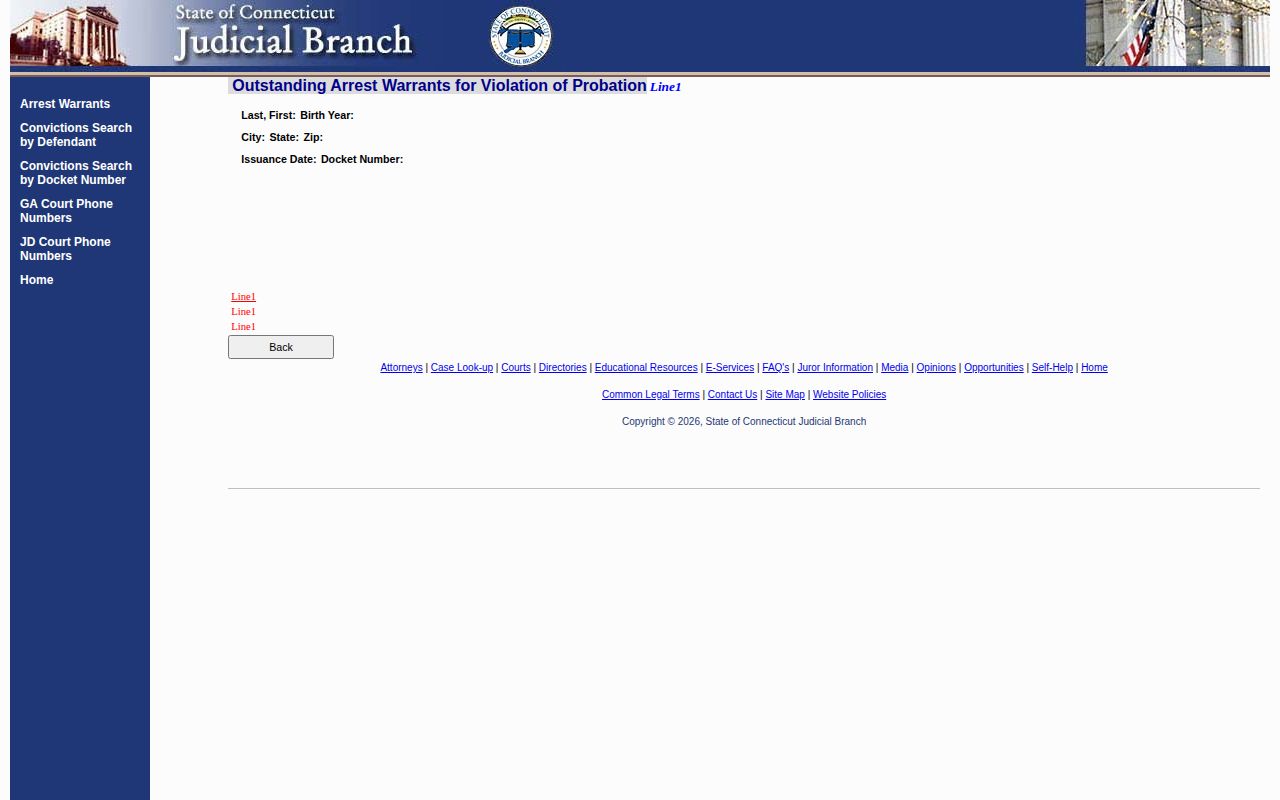
The blank form beats any copied list. Its warnings and search fields stay in context, right where the source put them.